
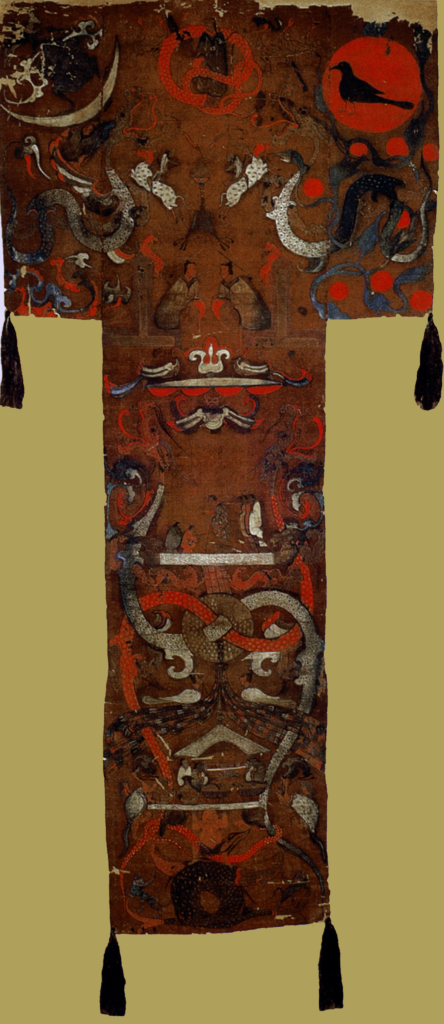
Lady Dai’s dazzling funeral banner
As I approached the end of the semester I wanted to find an image for this extra credit assignment that would convey the focus of this class; how studying an object in depth can provide historical, political, economic, and cultural information about the society and people who created it even if the object is centuries old. I found the image of Lady Dai’s very beautiful funeral banner which was recovered from her 2,200 year old tomb in the Han Dynasty site of Mawangdui. I knew this was the image I was searching for because of its ancient age, status as an iconic artifact, the bounty of symbolic images within the banner, and it’s still amazingly beautiful appearance.
Lady Dai was a noblewoman and the wife of the Marquis of Dai during the Western Han Dynasty around 168 BCE. The banner is divided into four panels, each depicting a different aspect of Lady Dai’s journey to the afterlife.
The image of this banner is so richly colored and vibrant it is hard to believe it was laying face down on her innermost coffin for two millennia! It is eight feet long and made of pure silk and symbolizes the otherworldly existence of the dead Lady Dai. The red sun and crescent moon on the upper widest part of the banner are thought to represent heaven, while the numerous other creatures and people represent fate, Lady Dai’s ascent to heaven, and many other theories. Further along the banner Lady Dai herself is leaning on a cane surrounded by mourners and below that either a banquet or a sacrificial scene (differing schools of thought). The panel at the bottom of the banner is dedicated to the underworld including giant fish, serpents, and turtles, all symbols of watery depths. A strong looking man is supporting the banquet table in the panel above it, which is thought to represent the earth.
The funeral panel of Lady Dai provides insight into the beliefs, rituals and the Han Dynasty’s theories of the universe. The intricacy of the details and the vibrant colors show the skill and artistry of the time and the content of the panels reflect the Han Chinese views on the importance of funeral rituals to provide a successful journey to the next world.
