
In “The Social Life of Inkstones,” Dorothy Ko explores the cultural and social significance of inkstones in China from the 7th to the 17th century. Inkstones were not just tools for grinding ink; they were also objects of status and beauty, and played a role in social rituals and artistic practices. Ko believed that the stonecutters that produced inkstones were very artistic and creative, but that craftsmen in China were denigrated and not valued despite being crucial to this industry.
The Qing dynasty was materialist – they spent their time on how things were made. They knew they had to study and learn from outside artisans and they knew that it was important to be able to make things well and on their own.
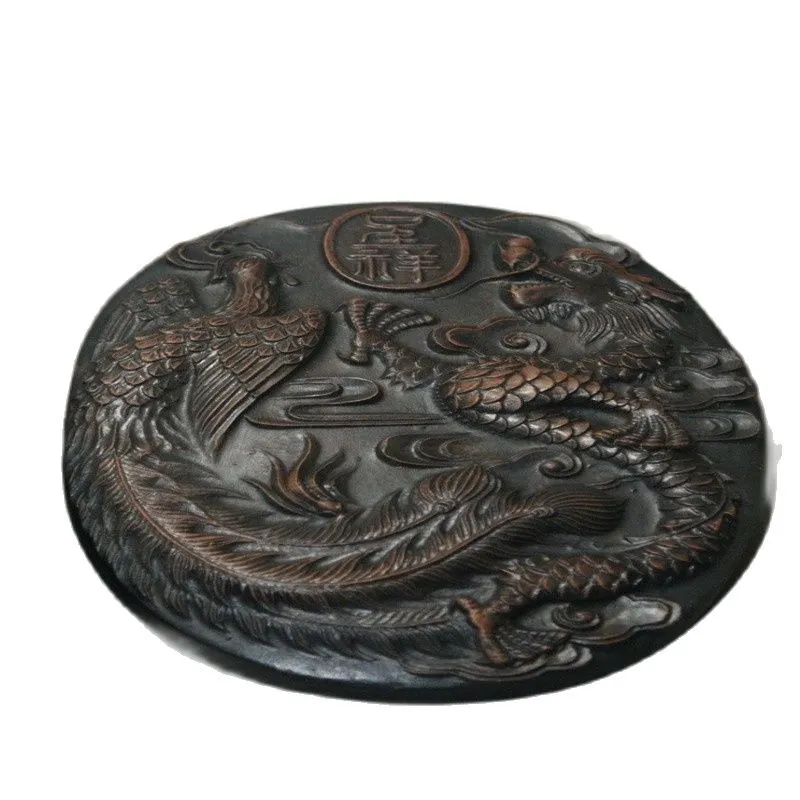
Dorothy Ko visited inkstone-carving workshops to study Gu Erniang, an accomplished inkstone maker. These inkstones were inscribed with round shapes – a phoenix with draped plumage or a moon surrounded by clouds. Also, Erniang’s inkstones were being carved deeper and deeper. Her work would appear across different parts of the empire.
The 18th century was a fluid period – nobody was sure who was a scholar vs. an artisan (as opposed to prior centuries when it was clearly defined). But as China became commercialized in the 16th century, more money flowed and even if your father was a scholar, you might not be one because you couldn’t pass the exam. But you might still have some wealth and write poetry. So maybe you are an “artisan/scholar” not a “scholar/artisan”. The status symbols were changing and had to do with more about what you claimed to be which would be subject to social judgment.
In his poem from the early 800s, Li He had feared that his work and the work of other writers would be forgotten. He had seen the “poems of Bao [Zhao]” being quickly forgotten. Bookworms and silverfish were thought to be responsible for the destruction of a piece of writing. The only way to ensure a book survived was to read it often. As Bao Zhao’s work disappeared, Li He’s work “remained staples of the literary canon and Chinese school curriculums to this day”. The survival of books can be attributed to treatment of them – people took care of books – and Li He appealed to the reader that books should continue to be written and taken care of.
During Medieval China, books were often lost to fire, natural disasters, and war. Also, as Li He mentioned, bookworms and silverfish, and mold, made a book unreadable. To combat this, people dried pages of books during summer.
Bibliography
Podcast: New Books in East Asian Studies, interview with Dorothy Ko, author
of The Social Life of Inkstones
Smithrosser, Elizabeth. “Bookcare in Medieval China.”
